Monday, September 30, 2013

Code Name Verity: A book that punches you in the face

Someone (Tika. It was Tika) recommended Code Name Verity by Elizabeth Wein to me a while back, and I not only put it on hold at the library, but I went there, checked it out, and FINISHED it. This should already be a clue as to how good it is.

The real thing that got me invested was that one of the main characters says "YOU STUPID NAZI BASTARDS" on page five. So right then, I was like "Okey dokey, I am strapped in for this book, let's go."
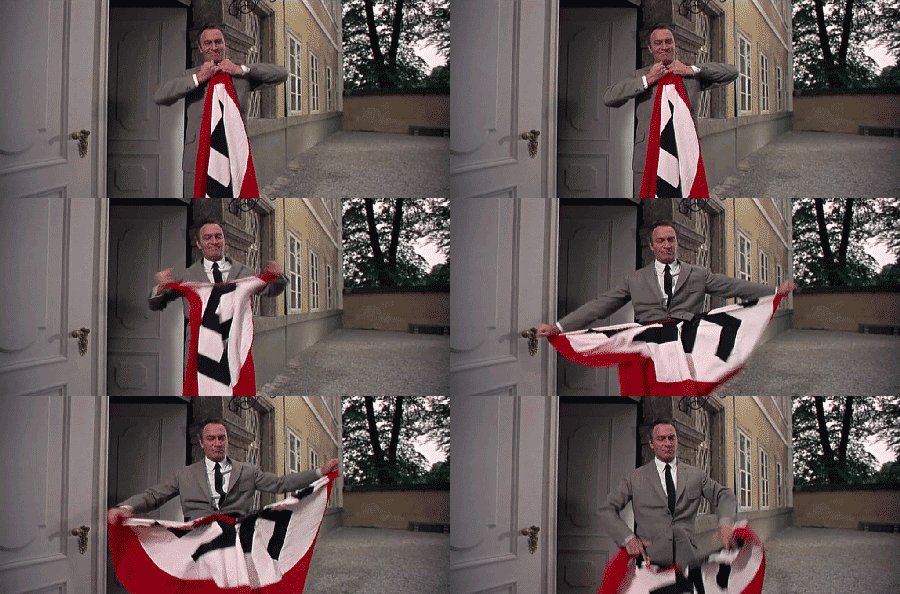

TAKE THAT, NAZIS

It's set during WWII in England, and narrated through what are essentially journals. Which is fantastic, because it's first person, but not necessarily first person omniscient (USING THAT WORD IN A MORE SPECIFIC SENSE HERE), because these journals are READ. By the NAZIS. One of the main characters is being held prisoner in France and being forced to tell her story. Fortunately she's charming and hilarious, which I would find it hard to be while held in a Nazi prison, post-torture.


It's mainly a novel about female friendship, which is rare, thank you -- at least when it involves just two women and no magical pants or made-up words like Ya-Ya.
None of this, thank you.

But hopefully some of this in scenes not shown

The main characters are two women working for the RAF. I think. Maybe. Look, the most I know about WWII and planes, I learned from Memphis Belle (one of the greatest movies in history), and what I mainly learned from THAT is that when there's cloud cover over the target, you're fucked. And also that true friendship is what'll fly you back home. Also a plane and Matthew Modine.

So let's just say they work for the RAF, although maybe they don't, but they DO have something to do with the war and planes and pilots, so that sounds right in my head. And even though I'm not doing a stellar job of showing it right now, CNV actually did teach me a lot more about WWII and pilots in England than I knew before. 

It's a really spiffy, YA-but-awesome book. And a super-quick read, even though it obviously took me weeks because I get DISTRACTED, you see, but I still finished it. And now there's a companion book to it called Rose Under Fire, that I will most def be reading, and possibly writing the author a letter about after, because I'm fairly certain we're meant to have tea and blueberry scones while chatting about how female friendship is rarely portrayed in literature and how that is bullshit.

Thursday, September 26, 2013

Hey, is Gone With the Wind ok as a book?

So...Gone With the Wind. I feel like there might be a problem there. Or is there? See, I don't KNOW. Because everyone loves it. No one hates GWTW, which is amazing because it's approximately 85 million pages long and all about a LADY, and who likes books about ladies?

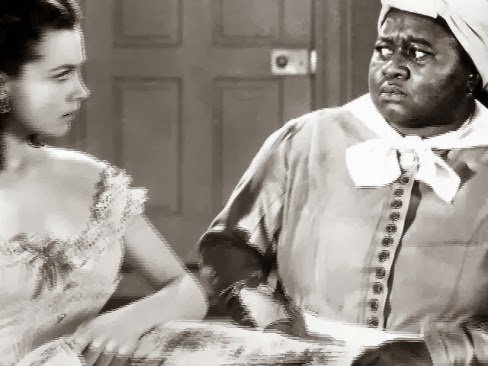
But also this happens, and omg.

It's beautifully -- nay, MAGICALLY -- written. Scarlett O'Hara is one of the most memorable characters in 20th century fiction. And she isn't even that likable, which is so damn ballsy of Margaret Mitchell. As a work of literature, it seems pretty great. But it makes me ever so slightly uneasy.

Gone With the Wind is Southern apologist fiction. It's a lament for another time when everything was civilized and people went to barbecues and took long naps and, y'know, bought and sold other people's lives. Whatever, everyone's happy, right?


That's not the main point of the novel. I'm gonna go ahead and confidently state that it's a novel of hope about the South and its ability to "rise again." Scarlett is the land; Mitchell makes a huge point about Scarlett and her father's plantation Tara being one and the same, and the only thing she cares about throughout the novel is holding onto Tara and surviving. So we have a downtrodden, poverty-stricken South in the 1930s, and a novelist who wants to raise its image not only among her fellow Southerners, but throughout the country.

But if you're a novelist looking back to and writing about the last time you were A Great Land, and that time involves slavery, you're maybe going to sound like a dick about slavery, because you're pretty much saying everything was awesome back then, and "everything" includes you treating other human beings as property because their skin is the "wrong" fucking color.

There're all kinds of defenses you can make of GWTW, and here's the thing -- you can still love it. You can love something to death and still acknowledge that it has problems. Do I love Britney Spears? YES. Are her life choices perfect? Well. That's for another time.

But while yes, defenses can be mounted for GWTW, one of the ways you can cut through those is to look at practical, real consequences. And what I know as a practical, real consequence is that in 8th grade, when I read that book for the first time, my class was going going over the Civil War, and I was the BIGGEST of Southern apologists. "They initially formed the KKK for ok reasons" and "The Civil War wasn't even about slavery; it was about states' rights" and "The slaves were treated better on the plantations than they would've been out on their own."


YEAH. THAT HAPPENED. And by the way, the Civil War being about states' rights?


Right. It so wasn't about slavery: it was just about the far more pressing issue of whether the states had the right to keep their slaves despite what the federal government said. That's tooootally what they cared about. State sovereignty. "You want to NOT let me do this thing I like, and I am mad NOT BECAUSE I WANT TO DO THE THING but because of you being allowed to not let me." 


It would be like states seceding from the Union because they still wanted to ban gay marriage, but then saying their seceding was about states' rights and totally not about gay marriage why on earth would you think that that's so silly.

I'm not saying the events that happen with the slave population in Gone With the Wind never happened. But if you're talking about something as touchy and as TOTALLY RECENT THIS WAS 150 YEARS AGO as slavery, you have to achieve something of a balance, if not an imbalance in the "oh yeah, slavery was super-shitty, don't think I'm not saying that" category. Instead it's that the slaves at Tara SO DON'T WANT FREEDOM because they love the family so much, and the ones who ran away are portrayed as acting like assholes, and then a former slave and his companion attack and try to rape Scarlett in the woods. Now GRANTED, in that last situation, one of the guys is white. But too little too late, Mitchell. 

Look, it's a manipulative book. If I had read it anytime recently, I probably wouldn't be able to bring myself to write this, because it's SO beautiful and SO well-done, and the only problem you see while reading it is those damn carpetbaggers and that white trash Slattery girl who're trying to raise themselves above their social caste HOW DARE THEY and make money off the fall of a refined and noble people (...who still see it as fine to own other people).

If you haven't read Gone With the Wind, you absolutely should. It's immensely readable. And wonderful. And in my top ten books of all time. But. Y'know. Be aware.

It's kind of racist.

Monday, September 23, 2013

Night Film by Marisha Pessl: Nope

I can't handle scary movies. I can't handle scary movies to the point where when I watched a documentary on H.H. Holmes by myself, I then called my friend to make her tell me he wasn't hiding in my apartment, AND THEN I CHECKED ALL THE CLOSETS. So I usually don't go out of my way to expose myself to scary things, but when I do, they better actually be scary, damnit.

Yes, this movie terrifies me. He has a MASK ON,
people.

I'm not sure what gave me the impression Night Film would be scary. Things gleaned from other reviews? The cover? The concept? Not sure. But was it scary? No. No, it 100% was not. And I want the money back that I did not spend because I got it from the library.

The plot is there's an investigative journalist named Scott McGrath (+10 for Journalist-Sounding Name) who's looking into a filmmaker named Stanislaus Cordova who makes the scariest movies in the history of ever that make you reexamine your own life or look into your soul and DEAL with the shit you find there or something like that.

Along the way, he picks up two sidekicks and the whole thing plays out like that Where in the World is Carmen Sandiego computer game from the '90s where you'd go from like Lisbon to Brussels and meet some guy in a shady hat who was like "Yeah, I seen him. Couldn't make out his features much because of the red beard, but he had a Tagalog dictionary with him" and then you'd check off 'facial hair' and ask your mom where they spoke Tagalog and take your little plane to the next city.

So the whole book is them being led from clue to clue until -- BAM! They've got the bad guy. But Carmen Sandiego has eluded them again.

Better luck next time, gumshoe.

It's readable. The nature of the "this leads to this leads to this" means the book keeps moving. I eventually stopped regarding it as literature and thought of it as a really passive game I was playing. But it seemed to all be leading to a really exciting payoff, and -- nope. Uh-uh. None of that. Pretty much everything that could've been exciting becomes unexciting when the conclusion comes trotting in.

If you're NOT looking for a scary book, then you might like it? It's a quick read, and I like what Pessl does with screenshots of websites. She also does a really good job of integrating Cordova into late 20th century popular culture, to the point where it seems like he could be a part of the filmmaking world and you've just somehow overlooked him until now.

But don't make the mistake of thinking the author keeps stretching out the tension so you'll be REALLY scared by the ending. That only leads to disappointment and Charlie Brown sadness.

Friday, September 20, 2013

Poetry: Let's maybe talk about it I guess.

Poetry is not popular in our time. I'm not sure why.

I'd say it's because we're post-Enlightenment, but the Enlightenment loved the shit out of poetry because it used to be HILARIOUS. Then the Romantics picked it up and...y'know...did their thing with it, and then the Victorians said "OH! We can...um...it can be like a novel! Oh, we love the novel. It is our favorite. Make poetry like that." Then the Aesthetes came in at the end of the 19th century and wrote poems with titles like "Athanasia" and "Penumbra" and wandered down lanes holding flowers in their open hands because it was beautiful.

Rule Britannia

Then, y'know. We reached the Modern Era and everyone was sick of everything and jaded because of the War and they decided to say "Fuck it" to the past and just go off and do their own thing. Which is particularly nice to read when you've just spent a semester immersed in Browning and Tennyson. "SCREW YOU CONVENTIONS WHAT IF NOTHING IS CAPITALIZED AHAHAHAHA TAKE THAT." (...contemporary times have gone the opposite way)

People still read novels. They still attend plays. But poetry nowadays seems to have been forgotten as a form of entertainment, or even as an attempt at promoting one's own cultural edification (not contemporary poetry, anyway).

My own gut reaction when I think of poetry is that it's self-involved, overly emotive, irrelevant, and stupid. I didn't even dig deep for that. BUT. Is there any real basis for that opinion? Well, yes. Unfortunately, that opinion mainly comes from exposure to the poetry of teenagers, who're almost all writing like a combination of Poe and Byron but without the talent, or at the very least the requirement that their verses have some sort of structure.

How I see current poetry

Good poetry is so, so, so good. And we're still exposed to some of it through music. We can handle modern poetry in music. I wouldn't be an e.e. cummings fan if I hadn't had to perform "i carry your heart" by John Duke. Despite making fun of the Romantics and poets in general, poetry does fill a void in the arts that I would be CRESTFALLEN to see return (I'm assuming the last time it was there was the prehistoric era). I absolutely don't have the language to discuss why poetry can do the things it does, but it's more able than any other artistic form to capture a sentiment or an idea and fix it in your mind, using words with an at-times surgical precision. We need it.

So. What're some poems I love?

anyone lived in a pretty how town, e.e. cummings 
Sonnet XIV, Sonnets from the Portuguese, Elizabeth Barrett Browning 
Ozymandias, P.B. Jelly 
A Nuptial Sleep, D.G. Rossetti 
At a Seaside Town in 1869, Thomas Hardy 
The Rape of the Lock, Alexander Pope 
La Belle Dame Sans Merci, John Keats 
Howl, Allen Ginsberg

It's Friday. I would like to read some new things. If you want to post the names of your favorite poems, I would be eternally delighted (or at the very least, delighted until 5 PM).

Wednesday, September 18, 2013

Opera: Making Books Better (Unless That Book Is Little Women)

Much like the television and movie adaptations of now (Gone Girl the movie is happening, guys — not sure how riveting it's going to be if you already know the twist but OKEY DOKEY), back in the day, people would take books and adapt them for other forms of popular entertainment. LIKE OPERA.

I know!

Yes, from early on with Mozart and Beaumarchais's sexy new play Le Mariage de Figaro, to present day with Jake Heggie and Sister Helen Prejean's Dead Man Walking, opera is On Top of It when "It" means giving you that thing you liked already, but now with people singing the whole time instead of just boring words with no music.

What's that? You want to know what popular operas are based on books? WELL THEN.

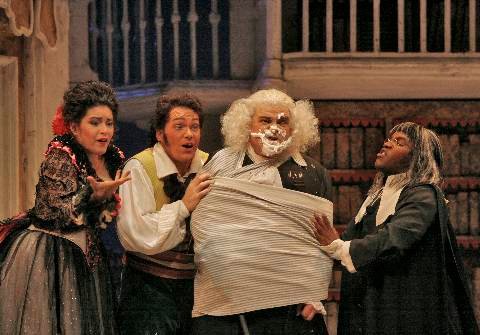
Il barbiere di Siviglia, Rossini. Because opera likes confusing people, Mozart set the second of Beaumarchais's trilogy to music in 1786, and Rossini set the FIRST to music in 1816. One is clearly better (HINT: it's Barber). While Mozart put a lot of "stuff" and "themes" to think about in his opera, it's also a million hours long and boring as hell. Barber of Seville is a nonstop fun ride of catchy songs and Bugs Bunny-like disguises. Basically, disguised nobleman wants to marry captive pretty girl. Captive pretty girl's old gross guardian wants to marry her. Disguised nobleman ends up marrying captive pretty girl AFTER MANY COMIC SHENANIGANS.

Such as this.

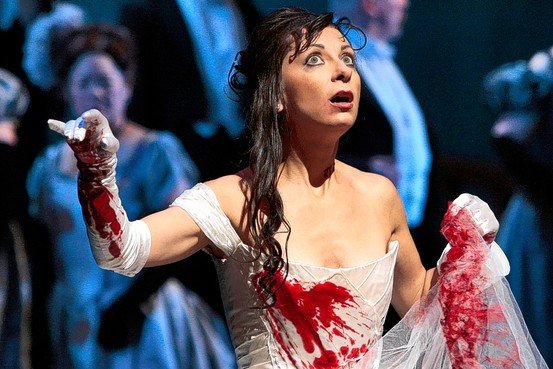
 Lucia di Lammermoor, Donizetti. "Lucia di Lammermoor" is just 'Lucy of Lammermoor," and yeah, it's an Italian opera set in Scotland. OBVIOUSLY. It's also based on the novel The Bride of Lammermoor by Sir Walter Scott, which by most accounts sucks. Some characters were changed a bit for the opera, but overall the story in both versions is very much like Romeo and Juliet, except at the end, Lucia has to marry some guy to make an alliance, the guy she actually loves returns right after she signs the marriage contract (of COURSE), and she then goes crazy and stabs her new husband in their room like 27 times, comes back downstairs, sings her Mad Scene for about 15 minutes and then drops dead.

This is the only scene you'll ever see promoted for this opera

La Traviata, Verdi. OMG IT'S LA TRAVIATA. Which is the best opera ever. Okay, so Traviata is just Moulin Rouge. I wrote a paper on this in high school. But what the opera itself is based on is La dame aux camélias by Alexandre Dumas fils. Not père — fils. So not the guy who wrote The Three Musketeers and The Count of Monte Cristo, but his wispy son who decided to write about falling in love with a courtesan who then coughs herself to death. IT'S SO GREAT. And the book itself is really good, too. MAYBE the best book an opera's based on. Save one. This next one.

Eugene Onegin, Tchaikovsky. The verse novel Eugene Onegin by Pushkin is huge in Russia. No, I don't think you get it — it. is. huge. Pushkin is the Russian Shakespeare, and Onegin is his most famous work. When Tchaikovsky had to adapt some  of the verses for his operatic version, PEOPLE LAUGHED AT HIM FROM THE AUDIENCE. Laughed at his sad attempts at rewriting Pushkin to fit his miserable music! How dare you, sir! How dare you. 

What happens in this is a 16 year old girl is smitten with this guy Onegin, writes him a love letter, he comes to see her and is all dismissive and mansplainy, she is crushed — CRUSHED — and then years letter she's married to a nice old man and is high up in society and he sees her at a party and ah-HAH, this time it is HE who is smitten. But she has honor and stuff and says no, and The End. There's an awesome rhyming translation of this book by Douglas Hofstadter that I was ob-sessed with in high school and you should read it because it's great. Or maybe that's just when you're 16.

Manon, Massenet. This opera kicks ass. It's part of the five act French grand opera tradition, complete with ballet, and what essentially happens is it's the downward spiral of Manon Lescaut from innocent country girl, to fairly innocent mistress, to courtesan, to prostitute, to dead. AND THE MUSIC'S SO GREAT. If you're on Spotify — N'est-ce plus ma main. Find it now (the Beverly Sills version). She's trying to re-seduce her old boyfriend WHO IS NOW A PRIEST, and she obviously succeeds, because that aria is the best. This is all based on the novel Manon Lescaut by Prévost, and you can totally give it a miss, but I'm grateful to it for giving us Manon. I. Love. Manon.

Werther, Massenet. I might be a giant Massenet fan. BUT ONLY BECAUSE HE IS SO GREAT. Okay, this one is based on The Sorrows of Young Werther by Goethe (original title: Die Leiden des jungen Werthers) and is about an emo poet who meets a girl he falls in love with at first sight, but she's engaged to another guy, and in the end Werther shoots himself in the head. There's a whole fun story here about the pronunciation of the opera title, because the original's German, but the opera's in French, so you retain the — you know what, not important, but still fun.

The book's okay, but really focused on philosophy and whatnot, so if you solely want Werther being emo over Charlotte, THE OPERA IS FOR YOU. I got obsessed with it back in the day solely based on the angst radiating from this picture:


There are, of course, others. Verdi wrote operas based on Othello and Macbeth. Thomas wrote a Hamlet, Gounod wrote Faust and Roméo et Juliette, Mark Adamo did Little Women, Puccini did Scènes de la vie do Bohème, Bizet did Prosper Mérimée's Carmen. ET CETERA. But these are the pretty fun ones.

In conclusion, opera is great and you should go see one.

And its fans are kind of fun.

Monday, September 16, 2013

Walt Whitman and Thomas Hardy would be terrible roommates

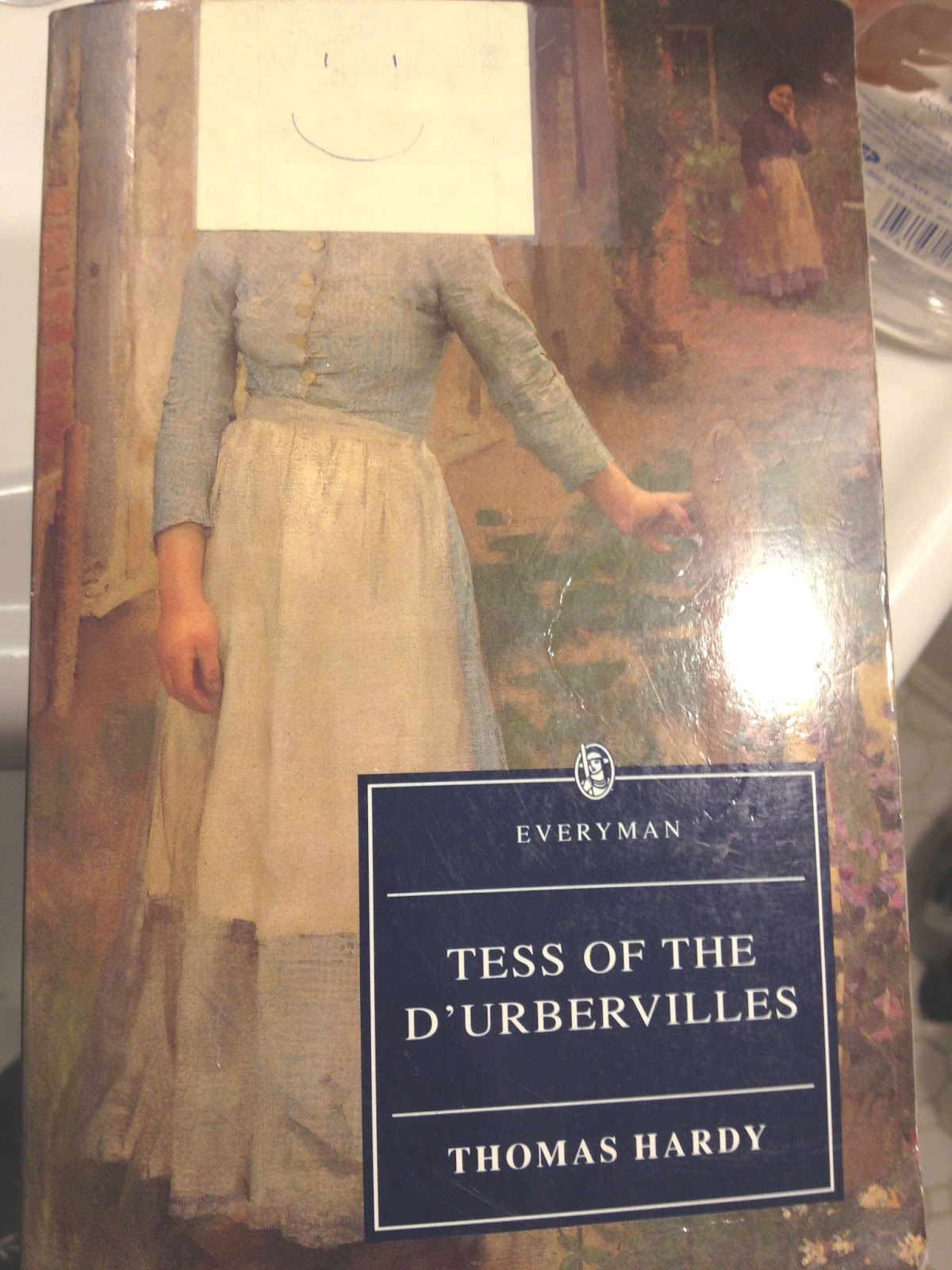
You all ever read any Thomas Hardy? I did. I read Tess of the d'Urbervilles (which is an IRONIC TITLE, by the way), and if you will remember, did this to the cover because the whole thing is too fucking sad:


You think anyone was ever like: 

"Hey Tom. Tom. Tom. Want to maybe take a walk in a glade? Drink some vitamin C? Get a happier outlook on life?"

"No."

In my continuing If Authors from the Past Were College Roommates series (I know two does not really equal a series, leave me alone), let's look at Walt Whitman and Thomas Hardy.

Whitman: "Eighteen years and now I am here!
Eighteen years and all so radiant
Eighteen years of life, and now we need to figure out
Who gets the desk by the window."

Hardy: 


Whitman: "I am a Nautilus, an ever-curving shell
Life is joyous and I will Celebrate it
Let's go to that luau they're having this evening.
(also I really want that desk)"

Hardy: 


Whitman: "Have you pondered the atoms of the universe? Have you figured out your
    class schedule?
Have you decided if we will be investing in a mini-fridge?
These things are important, Hardy."

Hardy:


Whitman: "I sing myself, and what I sing
Informs you that I will be taking the desk 
Since you are refusing to answer me.
And also if there is a sock on our faux oak door in the future
Go away."

Hardy:


Whitman: "A child said Where is the luau? searching for it with
Wide eyes;
How could I answer the child? I do not know any
   more than he.
I probably should have grabbed a flyer."

Hardy: 


Whitman: "I do contain multitudes. Now I go down
To ask the front desk guy -- whose hair is bright as a duckling's eiderdown
Where the luau is. Do not mess with my things.
   And maybe take a shower."

Friday, September 13, 2013

The books you have do not die with you


I have a grandmother I idealize.

She died of lung cancer two years before I was born, and is the only grandparent I never knew. I didn't miss her until I became a teenager and started actually noticing her books in my grandfather's study. Books on Eleanor of Aquitaine, books by Trollope (whom I still haven't read), books on the history of Africa.

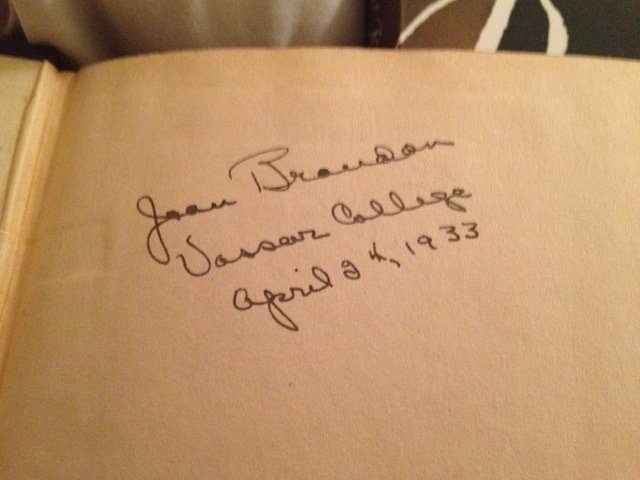
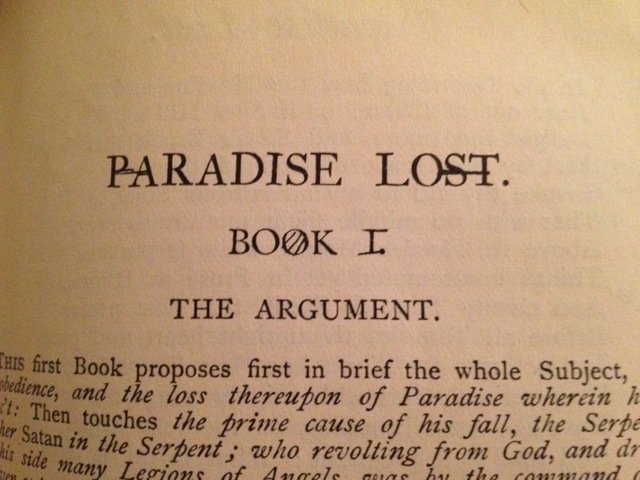
My grandfather died when I was 14, and I asked for and received my grandmother's books, most of which have stayed at my parents'. The only ones I decided to bring to Chicago with me when I moved at age 22 were two of her textbooks from college. One is a book of Spenser's poetry, the other is Milton. I hate both of those men, but I love that she wrote in their books. It's mostly the kind of idiotic notes you take in freshman year lit classes, but occasionally there're things like this:


Because people don't only doodle in the 21st century.

One of the only personal notes I could find was this in the upper right-hand corner:


And it completely delights me. How diff from Shaw indeed, Grandma Jean.

One of the strongest cases I can think of for writing in books is the link it gives you with the future. I can only hope my copy of The Mystery of Edwin Drood survives so that my theoretical granddaughter can read my "Gross" and "sleepovers are the same forever" commentary. My copy of The Golden Bowl has a note from 15-year-old me at the beginning saying "Abandon hope, all ye who enter here;" my copy of Harry Potter and the Goblet of Fire was written in by my oldest brother, saying 'To one of my favorite Muggles;" and I fully intend on penning something to future generations informing them that the copy of Bleak House that they hold in their hands has been hugged well beyond an acceptable number of times.

The books people keep, and maybe write in, and decide to truck with them from home to home, can be the things that show you who they are — or were. Those books can help you feel a closeness to their owners that you wouldn't be able to achieve otherwise. My grandmother, it turns out, loved Jane Austen. How much time could we have spent debating whether Persuasion holds up well to a second reading? (I'm going to go with 'too much,' no matter how long) She could have told me her favorite Trollope, and which was the best to start with. She could have told me why she loved Eleanor of Aquitaine so much. I don't know, and it bothers me. But I'm glad I know she did.

1933 Jean Brandon. You will meet and marry a man named Joe who will love you forever, and you will have a son who loves rockets and outer space. He will marry a woman who is an actress and a writer, and their weird combination will give you a granddaughter you will never meet, but who thinks your taste in books is fabulous.

And keep going with the Milton. It eventually ends.

Wednesday, September 11, 2013

Let's take a chance and write about Lindy West

You know whose writing I love? Lindy West's. Like, to a degree where she'll write an article and I'll sit in despair in front of my computer because her writing is SO GOOD and SO HILARIOUS and I'm over here still being amused by repartee like "That's an ugly turtle." "YOU'RE an ugly turtle."

But more often lately, my friends have talked to me about how they don't like Lindy. Sometimes on a personal level, sometimes based on the articles she writes for Jezebel. And I get it. She is a terrifying individual. Hilarious, yes (HAVE YOU READ HER TITANIC REVIEW? I am going to have it framed someday). But still terrifying. Terrifying to the point that I'm scared she's going to find this post and somehow come after me, even though I love her with the kind of love those Siamese children have for the King in The King and I.


How I see Lindy West

But she does this thing. This thing where if her focus is on you and you're at all disagreeing with her, you feel that at any moment a mighty wrath is going to be unleashed and you will be left like the blasted and hollow exoskeleton of a crab on the beach. I tweeted at her once a few months back about how mayyybe her style of replying to people who disagreed with her could be viewed as bullying, and I seriously had MULTIPLE PEOPLE either PMing me on Twitter or gchatting me, all saying "OMG WHAT ARE YOU DOING I WILL MISS YOU WHEN YOU'RE GONE."

So there's that.

When I read this, my reaction was basically "Okay....so....I don't need to say anything. Because this is 100% not my business." But I feel like the few times it's been said, it's been JUMPED on in an extremely negative way, so maybe if it's put out there by someone who thinks the King of Siam is REALLY SWELL but maybe shouldn't beat that slave, it's worth saying again. 

Which is that: People who disagree with Lindy West do tend to get immediately shut down in a terrifying way that few are strong enough to withstand. People whose intentions I sometimes think she's really misunderstood get told they're idiots, and then her legion of sycophants goes after them, which is kind of like watching a pack of hyenas gnawing the carcass of something taken down by a hilarious but brutal lion. YES IT'S THAT UNPLEASANT TO SEE IN THE JEZEBEL COMMENTS SECTION OR ON TWITTER. If you .@ reply to someone you're arguing with on Twitter, you're essentially saying to all your followers "Hey, check out this asshole." And they will then attack en masse, because they want the lady they follow to favorite the thing they said. 

You can say "I'm not in charge of what people who follow me do," but I don't understand how you can NOT see that you're encouraging them to act that way and thereby silencing people who might disagree with you, but are afraid they'll be misconstrued and then mocked/told they're dumb/ganged up on. She has a lot of truly excellent things to say, but some of them get buried by a misreading of and unfortunate reaction to occasionally legitimate criticisms.

Now if you will please excuse me, I have to go cleverly hide myself somewhere.

There we go

Sunday, September 8, 2013

Five Studies in Dickens's Edwin Drood: Nerds Writing Nerdsays

In that fragmentary firmament which Charles Dickens called The Mystery of Edwin Drood the stars shine on, and I may still fix my gaze upon them, seeking for the letters I have yet to learn.

Richard M. Baker...is a giant nerd. And I love him.


In 1948, he published a series of essays called The Drood Murder Case: Five Studies in Dickens's Edwin Drood, which I have just finished after having it out from the library for eight months (to exactly no one's surprise, no one else requested it during this time).


He basically describes himself as a giant Dickens dork who really loves Edwin Drood and so he researched the shit out of it. And oh. Yes he did. For those unaware, The Mystery of Edwin Drood was Dickens's last novel and only half of it was completed when Dickens died, leaving almost no clues as to the ending. This has prompted many scholars to try to piece it together (WHAT'S THE MYSTERY NOW, DICKENS), write books, write novel-form continuations, AND, of course, there is the musical The Mystery of Edwin Drood.


This might not be in the original

I don't consider things for Edwin Drood spoilers, because it is an UNFINISHED BOOK, so here's the quick rundown: In a cathedral town called Cloisterham, there's young Edwin Drood engaged to Rosa Bud (blonde girl above); his uncle Jasper who's creepy and in love with Rosa (guy above); Helena and Neville Landless, twins from India; and assorted other people who don't really matter a ton but whom I love very much (HIRAM GREWGIOUS AND THE REVEREND CRISPARKLE 4EVR). 

Edwin and Rosa have been engaged since childhood, but decide to call it off because they feel all sibling-like towards each other, and ew. Jasper doesn't know this, and PROBABLY (definitely) kills Edwin. I mean, we don't know for sure, but he basically says he's going to and then slobbers all over Rosa and then the last time Edwin's seen alive, Jasper's going upstairs to see him with a long black scarf twisted up in his hands. 


SO. Edwin disappears, what's up, who did it, is he dead or alive, what's going on with Jasper and will his opium addiction finally catch up to him, and most importantly, can Alice adopt the lawyer Hiram Grewgious even though he's way older than she is and fictional? Richard M. Baker tries to answer almost all these questions (leaving off the most important, but I forgive him, as when he wrote this my father was eight). And he is a GIANT dork about it. It's the endearingest. 

It was all over for me when, writing about the possibility of Jasper putting Edwin's body in quicklime and also trying to make sense of a six month skip-over that Dickens does in Drood (notable because he almost never does that in his novels), he starts mulling over how long quicklime would take to dissolve a body, and says:
Making a final attempt to settle this question, I presented my problem in a letter addressed to Dr. Alan R. Moritz, a criminal pathologist and head of the Department of Legal Medicine at Harvard Medical School. A week later I received a highly informative reply from Robert P. Brittain.

First of all, HOW cute are all the middle initials? Secondly — you are a man after my own heart, sir. You wrote a letter in the 1940s to Harvard Medical School asking how long quicklime takes to dissolve a body. (plot twist! it preserves it!)

He makes a pretty good case for 1) The identity of the mysterious stranger Dick Datchery, who appears right before the novel ends, and 2) Is Edwin Drood murdered? The answer to the latter seems to be "Yes, unless you're an idiot and believe otherwise." Why? Mainly because EVERYONE WHO CHATTED WITH DICKENS AT THE TIME SAID HE SAID SO. Meaning his editor, his son, and his daughter. And people are still like "Yeah, right, like he'd tell THEM what was going to happen in his book."


Edwin Drood's kind of neglected since it IS only a half-finished book. And some people're pretty mean about it. But I hereby tell you that it is complex, interesting, has characters that stick with you, and the fact that the book ends where it does isn't as maddening as you might think it would be. I love that it's set in Cloisterham (aka Rochester). It feels much more insular than most of his other, more sprawling novels. Rosa Bud has an actual personality, despite being his usual 16-year-old blonde heroine. And the exchange between Miss Twinkleton and Mrs. Billickin is one of my favorite Dickensian moments of ever.

I don't recommend this particular book to any of you, as it's just pure Edwin Drood nerdery, but you really should read the novel itself. And then listen to the musical. Which is ALSO great.

Wednesday, September 4, 2013

August, you were CRAZY. But I love you anyway.

I read a ridiculous number of books in August. Otherwise known as "nine."


And since I've been finding it hard to update the blog this week, let's do that fun thing where I outline said books quickly, which will maybe hopefully perhaps be translated into longer reviews, as I genuinely liked many of these.

Rose of No Man's Land, Michelle Tea. I reviewed this one. Michelle Tea's a damn brilliant writer. You should read her books. I think some people likened this to Catcher in the Rye for ladies, only the heroine complains much less, so you Philistines who don't like CITR will probably like this.

The Gifts of the Jews, Thomas Cahill. The title of this is just weird. Louis CK said "Jew" is one of those words that can sound really racist just depending on your tone, so I feel like I have to be cautious when saying it out loud and when a book title uses it, that increases the danger enormously. ANYWAY. This is about how the Jewish people (ah, nice) and their worldview influenced all of Western society. It's okay, but I vastly preferred Cahill's How the Irish Saved Civilization.

Frances Willard: Her Life and Work, Ray Strachey. Oh, Ray. You're the tops. This was a thoroughly accessible look into the cow-taming WCTU president we now all know and love. I tend to disregard biographies from the early 20th and previous centuries, but that apparently is just me being an idiot. It might not have an index, but it's still great. And has firsthand sources! Huzzah.

Love Story, Erich Segal. Well. I just really really liked this.

Passions Between Women: British Lesbian Culture 1668-1801, Emma Donoghue. I think we've established that I read in the shower. I was gchatting with my roommate's girlfriend and she said "I saw that in the bathroom and went 'Yup. Must be Alice's." WHATEVER EVERYONE WOULD LIKE THIS BOOK (lies). No, there's a way to make this subject boring, and that way is called Dangerous Intimacies: Toward a Sapphic History of the British Novel, and Emma Donoghue does not do this. This is one book of many that furthers the thought process of how to consider past lesbian culture, what constitutes a lesbian at a time when the term does not necessarily exist, and how did society as a whole treat this type.

Like that, I guess?

Inferno, Dan Brown. I mean. I dunno, you guys. It really is entertaining. Just ignore the bad writing. Just ignore it. Read for plot. Which is fun.

No Wind of Blame, Georgette Heyer. This was my first Heyer, and it was kind of a big disappointment. When I found out who did it and how, my reaction was essentially "Oh. Okay." There was one interesting character, and I think Heyer knew it, because she kept having her pop up. I really hope her romances are way better.

Coal to Diamonds: A Memoir, Beth Ditto & Michelle Tea. Beth Ditto, lead singer of the band Gossip wrote a book! With Michelle Tea helping! Hurray! It's really short, and even if you don't know who Beth Ditto is (LISTEN TO GOSSIP'S LATEST ALBUM ON SPOTIFY), it's worth a read.

And Beth's kinda awesome.

The Handmaid's Tale, Margaret Atwood. This was really great. Really...really great. Which I don't know normally say about books with a more didactic slant, but Atwood somehow did it. I think I shall attempt a genuine post on this one.

There's no way that level of reading is being maintained in September, but GOOD JOB, AUGUST. There wasn't even any YA in there. How ridiculous.